National Sleep Foundation Reaffirms Landmark Sleep Duration Recommendations
PR Newswire
WASHINGTON, June 10, 2026
Comprehensive review of 133 meta-analyses confirms 2015 recommendations
WASHINGTON, June 10, 2026 /PRNewswire/ — The National Sleep Foundation (NSF) today announced the publication of a comprehensive 10-year review of its landmark 2015 sleep duration recommendations, affirming that a decade of new science continues to support the original recommendations. The update also clarifies an important and frequently misunderstood question: do women and men need different amounts of sleep?
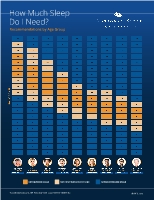
In total, the review examined 133 meta-analyses, encompassing up to 3,222 individual studies. The recommendations are published in Sleep Health®: Journal of the National Sleep Foundation.
When NSF published its original sleep duration recommendations, it was the first time any organization offered age-specific, evidence-based guidance on sleep duration for every stage of life, from newborns to older adults. In the decade since, NSF’s recommendations have been cited more than 9,000 times in academic literature, featured by some of the biggest names in health, and referenced by global media as the recommendation for sleep duration.
“A decade of new research has meaningfully advanced what we know about sleep health. NSF’s sleep duration recommendations reflect that evidence and demonstrate our commitment to keeping recommendations current and aligned with the science. At the same time, this review shows the core message remains unchanged: getting the right amount of sleep is essential for health,” said Joseph M. Dzierzewski, PhD, the study’s lead author and Senior Vice President of Research and Scientific Affairs at the National Sleep Foundation.
The following recommendations are reaffirmed for each life stage:
- Newborns (0–3 months): 14–17 hours
- Infants (4–11 months): 12–15 hours
- Toddlers (1–2 years): 11–14 hours
- Preschoolers (3–5 years): 10–13 hours
- School-aged children (6–13 years): 9–11 hours
- Teenagers (14–17 years): 8–10 hours
- Young adults (18–25 years): 7–9 hours
- Adults (26–64 years): 7–9 hours
- Older adults (65+ years): 7–8 hours
These ranges recognize that sleep needs vary across individuals. Some people can function at the lower or upper end of a range, reflecting biological, psychological, and social differences. The review also highlights that far fewer meta‑analyses exist for newborns, infants, toddlers, and preschoolers, underscoring the need for more research in early childhood sleep. Importantly, NSF emphasizes that sleep duration is only one component of sleep health, which it says also includes sleep quality, regularity, satisfaction, behaviors, and daytime functioning.
Of the 133 meta-analyses included in the review, 67 reported on sex differences, where most found no evidence that males and females need different amounts of sleep. NSF concluded the current science does not support separate sleep duration recommendations for women compared to men.
NSF’s sleep duration recommendations again give benchmarks to help the public answer the question “How much sleep do I need?” Getting enough of the healthy sleep you need can help you be your Best Slept Self®.
For more sleep health information, visit theNSF.org.
About the National Sleep Foundation
There’s only one National Sleep Foundation (NSF). NSF is an independent nonprofit organization dedicated to improving health and well-being through sleep education and advocacy. Founded in 1990, the NSF is committed to advancing excellence in sleep health theory, research and practice. In its 36 years, NSF has promoted sleep health through expert recommendations, consensus guidelines, tech standards, and easy-to-use tips and tools to improve sleep.
For more information about NSF, visit www.theNSF.org │ SleepHealthJournal.org

 View original content to download multimedia:https://www.prnewswire.com/news-releases/national-sleep-foundation-reaffirms-landmark-sleep-duration-recommendations-302796838.html
SOURCE National Sleep Foundation


