
Ozark, MO – September 09, 2026 – PRESSADVANTAGE –
Mr. Dent Collision Repair has updated its consumer information to explain how the materials used in modern vehicle bodies can influence collision repair planning. The September update gives vehicle owners additional context about why technicians identify the affected component and research vehicle-specific repair information before establishing an appropriate repair approach.
The newly expanded material focuses on four areas relevant to modern vehicle body construction: material identification, the location and characteristics of collision damage, manufacturer repair information, and the repair or replacement considerations associated with the affected component.
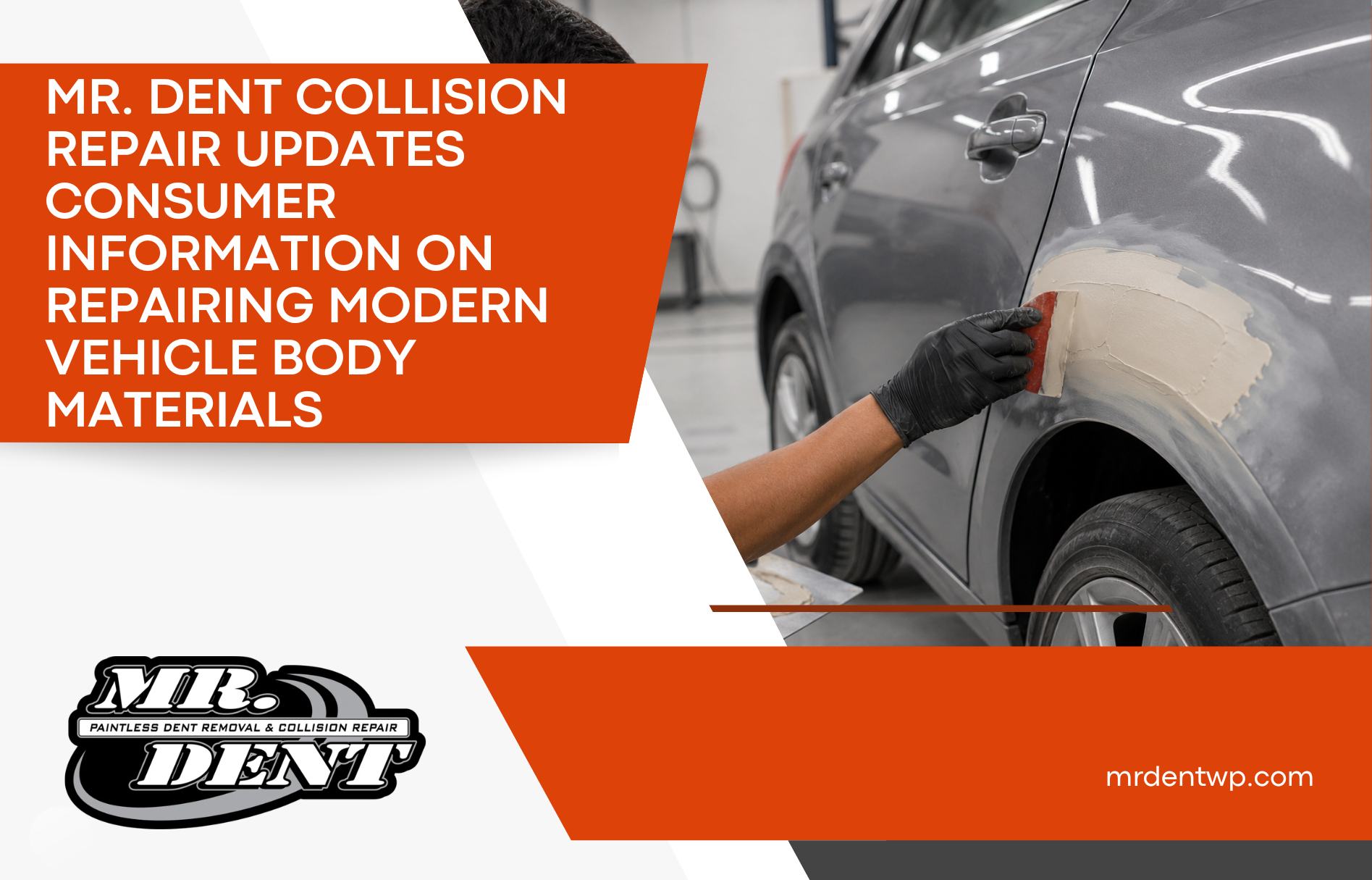
Mr. Dent Collision Repair developed the update for consumers served by its Ozark facility at 2116 N 20th St, Ozark, MO 65721. The resource is intended to explain terminology and considerations consumers may encounter during collision repair rather than provide a universal method for determining how a damaged component should be repaired.
Modern vehicles can incorporate multiple materials within the exterior body and underlying structure. Depending on the vehicle, these can include different grades of steel, high-strength steels, aluminum, plastics, composites, and other materials selected for particular components or assemblies.
The September update explains why identifying the affected component is an early part of repair planning. Two exterior panels that appear similar may differ in material, construction, attachment method, or manufacturer repair requirements. As a result, the appearance of collision damage alone may not provide enough information to determine the procedure applicable to a particular component.
Damage characteristics provide another part of the evaluation. Technicians can document the location, shape, depth, and extent of visible damage while also considering attachment areas, panel edges, body lines, mounting locations, and adjacent components affected by the collision.
The updated resource emphasizes that those observations provide information for repair planning but do not independently establish whether a component should be repaired or replaced. That determination depends on the individual vehicle, documented condition, component construction, and applicable repair information.
Material identification becomes particularly relevant because different materials can have different repair considerations. A procedure appropriate for one component or material cannot automatically be assumed to apply to another. The update therefore encourages consumers to view material identification as part of the technical research that occurs before the repair plan is finalized.
Manufacturer repair information represents the third area covered by the September update. Vehicle manufacturers publish model-specific information that collision repair professionals can consult when researching affected components and proposed repair operations.
Depending on the vehicle and area involved, manufacturer information can address subjects such as component construction, removal and installation, joining methods, repair restrictions, replacement procedures, and other requirements associated with the work being considered.
Mr. Dent Collision Repair’s updated consumer material does not attempt to summarize those requirements into a single rule. Instead, it explains why technicians research information applicable to the specific year, make, model, and affected component rather than selecting a repair procedure solely from the visible appearance of the damage.
The distinction can be useful when consumers review a repair plan involving several damaged areas. A collision may affect a bumper cover, fender, hood, door, quarter panel, reinforcement, or other components within the same general area. Those components do not necessarily share the same material or construction and therefore may involve different repair considerations.
The September update also provides additional context for repair-versus-replacement decisions. Material is one consideration, but it is not presented as the sole deciding factor. Damage location, severity, accessibility, component condition, attachment areas, manufacturer procedures, and other documented information can also contribute to the repair plan.
This means that identifying a component as aluminum, steel, plastic, or another material does not by itself establish that it must be repaired or replaced. The appropriate approach depends on the technical information and conditions associated with the individual vehicle.
The resource also addresses why additional information may become available after exterior components are removed. Collision-damaged panels and trim can restrict access to mounting locations, reinforcements, brackets, fasteners, and adjacent areas. When those areas become accessible during repair planning, technicians can document their condition and incorporate relevant findings into the repair information.
That process does not presume concealed damage. The update distinguishes between areas that were not initially accessible and conditions that are actually identified after access is obtained. This distinction helps consumers understand why repair planning can progress as additional vehicle-specific information becomes available.
Another section of the updated material explains the relationship between modern body construction and refinishing. When collision repairs involve painted exterior components, the repair plan can also include procedures associated with preparing and refinishing the affected area. The specific operations depend on the component, existing finish, repair performed, and applicable product and vehicle information.
For consumers, the expanded resource provides a practical framework for understanding why collision repair is increasingly component-specific. Rather than assuming that all dents, damaged panels, or exterior components are addressed through the same process, vehicle owners can consider four sequential points: what component is affected, how it is constructed, what condition has been documented, and what repair information applies to it.
The update also explains why repair plans for apparently similar collisions can differ between vehicles. Differences in model design, materials, equipment, component construction, attachment methods, and manufacturer procedures can result in different repair considerations even when exterior damage initially appears comparable.
Mr. Dent Collision Repair added the body-material section in September to expand its existing consumer information beyond general descriptions of auto body repair. The new material specifically addresses the increasing variety of materials consumers may encounter when reviewing collision repair documentation for modern vehicles.
The resource does not characterize one vehicle material as better, safer, or more difficult to repair than another. Its purpose is narrower: to explain why knowing what a damaged component is made from can be relevant to researching and documenting an appropriate repair procedure.
By focusing on material identification and vehicle-specific information, the September update gives consumers additional context for discussions about repair planning without attempting to predict the procedure required for an individual vehicle before it is evaluated.
The updated consumer information is available through Mr. Dent Collision Repair’s auto body repair resource. Additional information about the company’s collision repair services and OEM-certified repair capabilities is available through its website.
Information about the company’s Ozark facility is available through the Mr. Dent Collision Repair Ozark location page.
About Mr. Dent Collision Repair
Mr. Dent Collision Repair serves vehicle owners in Ozark, Missouri, and surrounding communities from its facility at 2116 N 20th St, Ozark, MO 65721. The company provides collision repair, auto body repair, paintless dent repair, auto glass repair, OEM-certified repair services, and related vehicle restoration services. Additional information about the company is available through the Mr. Dent Collision Repair About page.
###
For more information about Mr. Dent Collision Repair, contact the company here:
Mr. Dent Collision Repair
Logan Martin
417-581-5103
logan@mrdentmo.com
2116 N 20th St, Ozark, MO 65721, United States


